
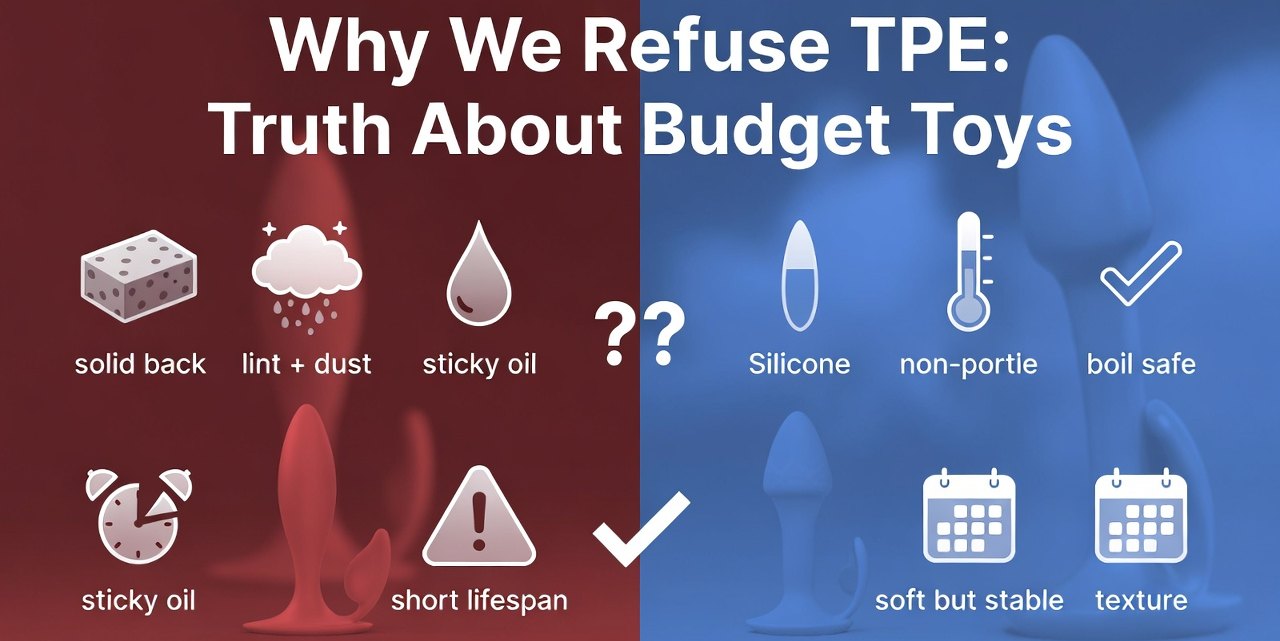
Cheap Sex Toys, Sticky Surprises: Why We Refuse TPE (And What They Won't Tell You)
Look, I get it. You're browsing Amazon at 2 AM, you see a stroker for $22 with 4.5 stars and "medical-grade TPE" splashed across the listing. Seems legit, right? Fast-forward three weeks and you're holding what feels like a lint-covered slug that smells vaguely of old gym socks. We've all been there—or at least, we've seen enough guys on r/SexToys posting their horror stories that it might as well be a rite of passage.
I've been designing toys for JockTribe for years now, and before that I spent way too much money learning the hard way what works and what absolutely doesn't. So when people ask why we refuse to touch Thermoplastic Elastomer (TPE) with a ten-foot pole, it's not snobbery. It's because I've watched too many guys get burned by the false promise of "realistic feel" only to end up with something that belongs in a biohazard bin.
This isn't another boring material comparison chart. This is the stuff the cheap brands won't tell you, the regulatory loopholes they exploit, and why that $25 toy is going to cost you way more than $25 in the long run.
Why Cheap Sex Toys Rely on TPE: What the Price Tag Doesn't Show
Here's the dirty secret of the adult toy industry: TPE is dirt cheap to manufacture. We're talking pennies per unit in raw material costs compared to medical-grade silicone. When you see a realistic dildo for $18 shipped, that's not some altruistic company trying to democratize pleasure—it's pure economics.
Injection molding with TPE is stupid easy. The material melts at relatively low temperatures, flows into molds like butter, and cools fast. A factory in Shenzhen can pump out thousands of units per day with minimal equipment investment. Silicone? Totally different beast. It requires platinum-curing processes, higher temperatures, longer cure times, and way more quality control. That's why a comparable silicone toy costs 3-5x more before you even factor in markup.
The supply chain tells the whole story. TPE pellets cost manufacturers around $2-4 per kilogram. Platinum-cure silicone? Try $15-25 per kilogram, and that's wholesale. When you're a budget brand trying to hit that magical $19.99 price point that triggers impulse buys, TPE is the only material that makes the math work.
But here's what kills me: they're not exactly lying when they advertise "realistic skin-like texture." Fresh out of the mold, TPE genuinely feels softer and squishier than entry-level silicone. It's got this ultra-soft give that mimics flesh in a way that can fool your hand on first touch. That's the hook. That's why first-time buyers fall for it every single time.
The problem is what happens after week two.
TPE's Early Allure vs. Its Long-Term Letdown (With Real User Regrets)
Let me share something I saw last month on Reddit. Guy posted: "Bought a $25 TPE fleshlight knockoff, used it 5 times, now it's a lint-covered slime monster that smells like old cheese—no amount of scrubbing helps." Thread blew up with 200+ comments of guys sharing nearly identical experiences. It's like clockwork.
Here's how it typically goes down. Day one: unbox your new toy, it feels incredible, realistic skin-like texture, that perfect amount of squish. You're thinking you scored a deal. Maybe you even recommend it to a buddy. Week one: still pretty good, though you notice it's attracting dust faster than it should. You wash it, powder it like the instructions say, move on. Week two to three: this is where the wheels come off. The surface starts feeling tacky even right after cleaning. That porous material structure is breaking down, oils are leaching out, and suddenly you need to store it in a separate bag because it's literally sticking to everything in your drawer.
One guy I know—fitness trainer, super careful about hygiene—told me he developed a UTI after using a cheap TPE stroker. He said, "TPE felt realistic at first but after a UTI scare from one, I threw it out—silicone is worth every extra penny for not rotting in your drawer." That's not an isolated case. We've seen recurring complaints on forums where guys report skin irritation, weird rashes, or infections after 4-6 weeks with TPE toys.
The emotional rollercoaster is real. You go from excited first-timer to disgusted regret-buyer in less than a month. And because TPE degrades so fast, you can't even resell it or pass it along—it's straight to the trash, which means you're out the cash and back to square one.
The worst part? Most guides don't prepare you for this. They'll tell you TPE is "beginner-friendly" because it's cheap. They won't show you photos of what it looks like after 50 uses in a humid climate. Spoiler: not pretty.

Advantages of TPE in Sex Toys and dildos
Okay, real talk: TPE isn't pure evil. If it were completely worthless, it wouldn't dominate the budget market. So let's be fair and talk about what it actually does well.
First, that flexibility and softness is legit. For TPE dildo, especially full-size ones, the material allows for a natural jiggle and movement that rigid silicone can't quite replicate at the same price point. If you're into realistic sex positions with a dildo, TPE's give and bounce can feel more lifelike during use. I've tested both, and I'll admit TPE wins on initial tactile realism for certain applications.
Second, cost. If you're genuinely on a tight budget and just want to experiment without dropping $80-150 on a premium silicone toy, TPE gives you an entry point. For someone who's never tried anal play or strokers and wants to test the waters before committing, a $20-30 TPE option makes sense if you understand it's temporary. Think of it like buying a cheap gym membership to see if you'll actually go before investing in a home setup.
Third, variety. Because TPE is so cheap to mold, manufacturers can experiment with wild designs, textures, and sizes that would be cost-prohibitive in silicone. You see way more niche shapes and ultra-soft textures in the TPE market simply because the financial risk is lower for producers.
For TPE sex dildo specifically, the lower weight compared to silicone is a genuine advantage. A full-size silicone doll can weigh 80-120 pounds; TPE versions often come in 20-30% lighter, making storage and handling less of a workout.
But—and this is a huge but—all these advantages are short-term. They're what you experience in the first 30-60 days. After that, the disadvantages start piling up so fast they bury the initial appeal.
Sticky, Lint-Magnet Nightmares: How TPE Toys Actually Degrade
This is where I need to get graphic because the degradation process is genuinely disgusting, and most product pages won't show you this reality.
TPE is a porous material at the microscopic level. Imagine a sponge, but one you can't see the holes in. Every time you use a TPE toy, body fluids, lube, and bacteria seep into those pores. You can wash the surface, sure, but you're not reaching what's embedded inside. Over weeks, that trapped organic matter starts breaking down. The result? That infamous "old cheese" smell users complain about.
The material itself is also thermally unstable. Heat sensitivity is a major issue. I've personally seen TPE toys warp in summer storage—one guy on X posted, "My girlfriend's TPE doll armpit started melting in 90F heat, left black stains on sheets—never again, sticking to silicone heads only." That's not an exaggeration. Above 85-90°F, TPE starts to soften beyond its designed flexibility, and the plasticizers inside begin to leach out as an oily residue.
That oil is what creates the sticky surface. It's not dirt—it's the material literally sweating out its chemical components. You can wipe it off, but it comes back within hours. Some guides recommend cornstarch or baby powder to combat stickiness. Total trap. The powder clogs those microscopic pores we talked about, creating a gritty paste that abrades your skin during use and traps even more bacteria. You're essentially making the problem worse while thinking you're fixing it.
Then there's the lint situation. Because the surface becomes tacky, TPE toys attract every fiber, hair, and dust particle within a three-foot radius. You pull your toy out of storage and it looks like it's been rolling around a barbershop floor. No amount of rinsing gets rid of it completely because the stickiness regenerates.
And mold growth? Absolutely a real risk. If you live somewhere humid and don't dry your TPE toy perfectly after every wash—and I mean bone-dry, which is nearly impossible given the material's texture—you're creating an ideal environment for mold spores. We've seen photos in forums of white or black spots developing inside TPE sleeves and removable vagina inserts after just a few months of regular use.
Some people try boiling TPE toys to "renew" them when they get oily. Worst idea ever. Heat warps the structure, causes tears along stress points, and doesn't actually extract the embedded contaminants. You end up with a deformed toy that's still gross inside.
The degradation timeline varies, but in my experience testing dozens of products, most TPE toys hit critical failure—meaning unusable or genuinely unsafe—between 2-6 months of regular use. Compare that to quality silicone, which I've had in rotation for 3+ years with zero material breakdown.
TPE vs. Silicone: Key Differences That Matter
Alright, let's get into the head-to-head because this is what people actually search for when they're trying to make a buying decision.
Material Safety: Silicone is hypo-allergenic and chemically inert. It doesn't react with body chemistry, doesn't off-gas, and maintains structural integrity indefinitely. TPE is a polymer blend that can contain plasticizers, some of which are endocrine disruptors if not properly formulated. Even "body-safe" TPE degrades over time, potentially releasing microplastics.
Porosity: This is the killer. Silicone is non-porous—bacteria, viruses, and fungi can't penetrate the surface. You can boil it, bleach it (10% solution), or run it through a dishwasher. TPE's porous structure makes it impossible to fully sterilize. You can clean the surface, but you're never getting everything out of those microscopic pockets.
Durability: Silicone toys and toys can last 5-10+ years with proper care. I have plugs and strokers from 2019 that look and feel brand new. TPE toys are consumables—plan on replacing them every 3-6 months if you use them regularly. The cost savings evaporate when you're buying four TPE toys in the time one silicone toy would've lasted.
Heat Resistance: Silicone can handle boiling water (212°F) and even brief autoclave cycles. TPE starts degrading above 140°F and melts around 160-180°F. This limits cleaning options and makes summer storage a nightmare in hot climates.
Texture Options: TPE wins on initial softness—it's genuinely squishier and more flesh-like out of the box. But silicone has caught up. Modern platinum-cured silicone formulations can be incredibly soft (Shore 00-30 on the hardness scale) while maintaining durability. We use these formulas at JockTribe specifically because they give that realistic give without the degradation.
Lube Compatibility: Silicone toys require water-based lube only (silicone lube degrades silicone toys). TPE is compatible with both water and silicone-based lubes, which is a minor convenience point.
Environmental Impact: Neither is great, honestly. But TPE breaks down into microplastics that are harder to recycle. Silicone is more chemically stable and some medical-grade formulations can be recycled through specialized programs.
Price: TPE toys run $15-50 for most products. Comparable silicone is $40-150+. But when you factor in replacement costs, silicone is cheaper over 12-24 months.
Here's my hot take: if you're using a toy more than once a month, TPE is a false economy. The only scenario where TPE makes sense is if you're buying something for a one-time fantasy or you're genuinely unsure if you'll like a particular shape and want to test before committing to silicone.

Is 'Body-Safe TPE' a Myth? Cutting Through Marketing Labels and Certifications
This section is going to piss off some brands, but it needs to be said: "body-safe TPE" is mostly marketing theater.
Let's start with phthalates, the plasticizers that make TPE flexible. Phthalates are endocrine disruptors linked to reproductive issues and hormone disruption. In the EU, the REACH regulation bans certain phthalates in concentrations above 0.1% in consumer products. In the US? The regulations are way looser. The FDA doesn't specifically regulate adult toys—they fall into a weird gray zone.
So when a brand slaps "phthalate-free" on their TPE toy, what does that actually mean? In the best case, they've used alternative plasticizers like DINP or ATBC, which are probably safer but have less long-term safety data. In the worst case, it's a complete lie because there's no standardized testing requirement for Amazon listings.
ROHS compliance (Restriction of Hazardous Substances) is another label you'll see. ROHS was designed for electronics to limit lead, mercury, cadmium, etc. It's tangentially relevant to sex toys but doesn't address the specific concerns around prolonged genital contact with polymer blends. Brands use it because it sounds official, not because it's particularly meaningful for this application.
Then there's "medical-grade TPE." This one drives me nuts. Medical-grade is a term that applies to specific silicone formulations (USP Class VI) that have undergone biocompatibility testing. There is no equivalent certification for TPE in the adult toy context. It's pure marketing fluff.
I've seen lab reports—because we commission them for competitor analysis—and the reality is most budget TPE toys contain detectable levels of volatile organic compounds (VOCs) and plasticizer migration that exceed what we'd consider safe for something spending hours in contact with mucous membranes. The off-gassing smell you notice when you first unbox a TPE toy? That's VOCs evaporating. Not great.
Here's what you can actually trust:
- CE marking (if genuinely applied, not counterfeit) means basic EU safety standards for consumer goods, though enforcement is spotty for imported toys
- ISO 10993 biocompatibility testing—but almost no TPE toys have this because it's expensive
- Third-party lab reports from companies like SGS or Intertek showing phthalate levels below 0.1%—but you'll rarely see these published unless you specifically ask
What you can't trust:
- Generic "body-safe" claims without supporting documentation
- Amazon listings claiming "FDA approved" (the FDA doesn't approve adult toys)
- "Medical-grade" without specifying which standard or certification body
The brutal truth is that the regulatory environment for adult toys is a mess. Most countries treat them as novelties, not medical devices, which means manufacturers can get away with labeling that would never fly for a baby bottle or food container. Until that changes, "body-safe TPE" will remain more aspiration than guarantee.
Maintenance and Safety Considerations for TPE
If you're going to use TPE despite everything I've said—and hey, I get it, sometimes budget is budget—here's how to minimize the damage and health risks.
After Every Use: Wash immediately with warm water and antibacterial toy cleaner. Don't wait. The longer body fluids sit in those pores, the harder they are to remove. Pat dry with a lint-free cloth (microfiber works), then air-dry completely in a well-ventilated area. We're talking 2-4 hours minimum. Moisture trapped inside is a direct path to bacterial infections and mold growth.
Storage: This is where most people screw up. TPE toys will stick to each other if stored in contact. Use individual cloth bags (not plastic—plastic traps moisture and heat) or wrap each toy separately. Store in a cool, dry place below 75°F if possible. I know that's tough in summer without AC, but heat accelerates degradation. Some guys keep TPE toys in a dedicated drawer with silica gel packets to control humidity. Does it help? Marginally.
The Powder Trap: Guides will tell you to dust TPE with cornstarch to reduce stickiness. Short-term, it works. Long-term, you're creating a bacterial breeding ground. The powder mixes with oils and body fluids to form a paste that's harder to clean than the original stickiness. If you must powder, use pure cornstarch (not talc—respiratory hazard), apply a light dusting, and be prepared to wash it off completely before next use. Honestly, I just skip this step entirely.
Boiling Doesn't Work: I mentioned this earlier but it bears repeating because it's such a common mistake. Boiling TPE to sterilize it will warp the material. The maximum safe temperature for TPE is around 140°F—boiling water is 212°F. You'll end up with a deformed toy that's still harboring bacteria because heat alone doesn't extract embedded contaminants from porous material.
Lube Choice: Stick to water-based lube. Silicone lube is technically compatible but can make cleaning harder. Oil-based lubes (coconut oil, etc.) will degrade TPE faster. Use generous amounts because TPE's texture can create friction—but know that more lube also means more residue to clean out.
Replacement Timeline: If your TPE toy starts smelling funky even after washing, develops visible discoloration, feels excessively sticky, or shows surface cracks/tears, it's done. Don't try to salvage it. The bacterial infection risk isn't worth saving $25. I'd say plan on replacing TPE toys every 3-6 months with regular use, or sooner if you notice degradation.
Realistic Expectations: Even with perfect maintenance, TPE will degrade. You're not doing anything wrong—it's just the material's nature. The porous structure and chemical composition make it a consumable product, not a durable good. Accept that going in and budget accordingly.
One more thing: removable vagina or sleeve inserts in TPE dildo are slightly easier to maintain because you can wash them separately and inspect for mold. But the same degradation timeline applies. If the insert starts feeling slimy or sticky even when clean, replace it. Your health isn't worth the $40 you'd save by pushing it another month.
Why We Refuse TPE — Brand Philosophy and Our Alternative Approach
So why does JockTribe refuse to touch TPE when it could massively expand our margins and let us hit lower price points? Simple: I've been on the receiving end of a degraded TPE toy, and I refuse to do that to someone else.
When we started designing our silicone casting line, I personally tested over 40 different TPE and silicone formulations. I used them in real-world conditions—Hong Kong summers, humid storage, regular cleaning cycles, the whole deal. The TPE samples all failed within 4-8 weeks. Surface breakdown, smell, stickiness, the works. The platinum-cured silicone samples? Still perfect after 18+ months of testing.
That experience crystallized our philosophy: we're not building disposable novelties. We're creating tools for guys who are serious about exploring their bodies, who want something that feels real but will actually last. The men buying our casts of real athletes aren't looking for a throwaway experience—they're investing in something that becomes part of their regular rotation.
Durability isn't just a feature for us; it's a responsibility. When you're making a toy that goes inside someone's body, you don't get to cut corners. The fact that TPE's porous material structure makes true sterilization impossible is a dealbreaker. I'm not willing to put my name on something that could contribute to a bacterial infection or UTI, even if it saves the customer $50 upfront.
We use Shore 00-30 silicone formulations that give you that realistic give and flexibility without the degradation. Yeah, our toys cost more—typically $80-200 depending on size and complexity. But we've had customers tell us they're still using toys they bought from us three years ago with zero material breakdown. That's the value proposition: one purchase that lasts years versus four TPE replacements in the same timeframe.
From a manufacturing standpoint, yeah, silicone is harder to work with. Longer cure times, higher equipment costs, more quality control steps. But that's exactly what ensures consistency. Every toy that leaves our Hong Kong workshop has been inspected for air bubbles, cure defects, and surface finish. We can't do that same level of QC with TPE because the material is inherently unstable—what looks perfect today might degrade differently than the next batch.
I've had guys tell me they bought a cheap TPE toy first, had a bad experience, then came to us skeptical about spending more. After using our silicone version, the feedback is almost always the same: "I wish I'd just bought this first." That's the validation we need. We're not trying to compete on price; we're competing on delivering an experience that doesn't fall apart—literally and figuratively.
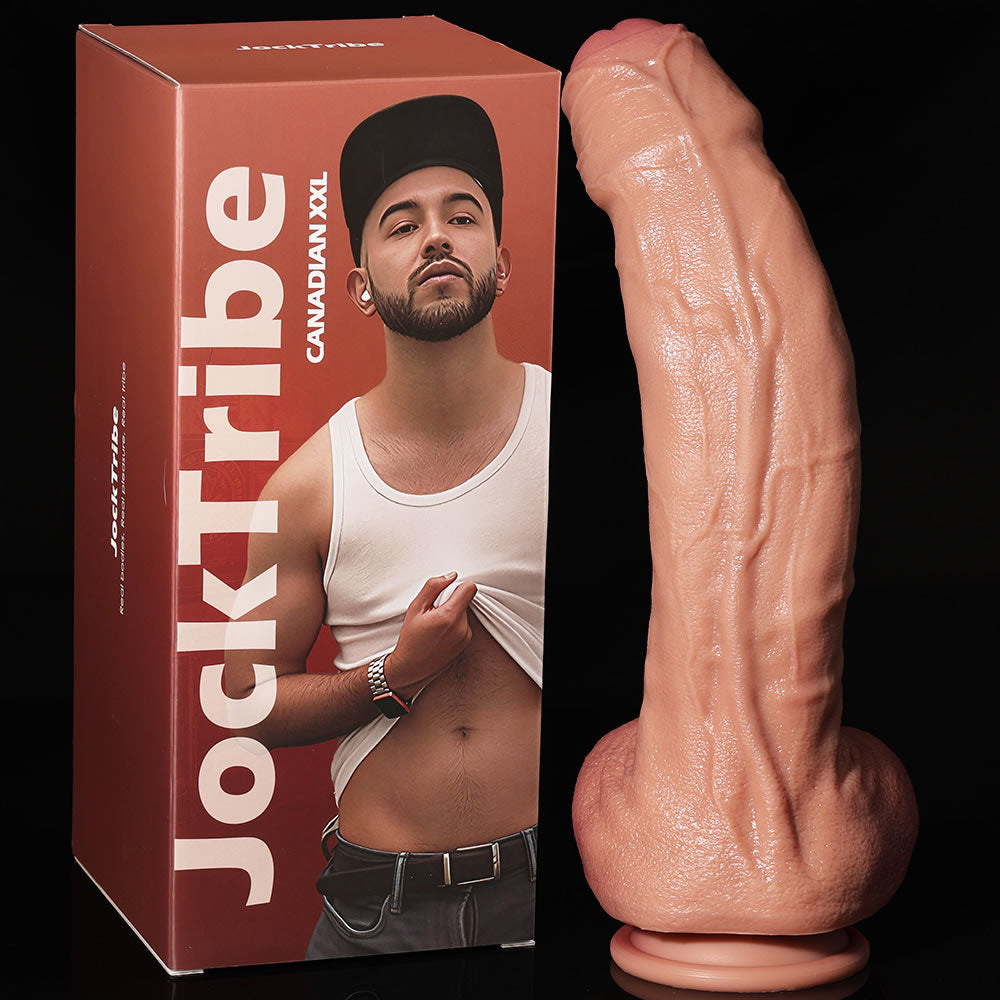
The bottom line: we refuse TPE because we've seen what it does to users, and we're not willing to trade long-term trust for short-term profit. Our brand is built on guys recommending us to their friends, posting honest reviews, and coming back for new designs because they know what they're getting. That reputation is worth infinitely more than the margin we'd gain by switching to cheaper materials. Click here to see our silicone dildo categories;

FAQ: The Questions No One Else Answers Honestly
Why does my new TPE sleeve feel sticky and gross by week 2 even after washing with toy cleaner?
Because of intrinsic plasticizer migration and material porosity. TPE relies on unbonded plasticizers that naturally sweat to the surface through heat and mechanical stress from use. What you feel as "stickiness" is the material degrading internally. Toy cleaner removes surface oil, but it cannot stop plasticizer leaching. Furthermore, TPE's porous structure traps body fluids and lube in microscopic pockets, creating a slimy biofilm that no surface washing can reach.
Can I revive a cheap TPE vibrator that's oozing oil and smells weird after storage, or is it trash?
It's trash. Oozing oil signals irreversible chemical breakdown, while persistent odors mean bacteria are colonized deep inside the porous material. Community hacks like boiling, vinegar soaks, or UV lights cannot reverse chemical degradation or extract embedded bacteria. Boiling will warp it, and alcohol causes cracking. Continuing to use a degraded TPE toy significantly increases your risk of UTIs or bacterial infections—toss it and switch to non-porous platinum silicone.
How do I store TPE toys without them melting together or getting lint everywhere during humid summers?
Store them in individual breathable cloth bags in a climate-controlled space below 75°F. Never use plastic bags, which trap heat and moisture to accelerate degradation. Avoid relying on powders, as humidity turns them into a bacterial-trapping paste. In humid climates without air conditioning (e.g., summers over 85°F/80% humidity), TPE's molecular structure naturally breaks down into goo within 6–12 months regardless of storage techniques.
Is 'medical-grade' or 'platinum cured' TPE from Amazon a safe pick, or just marketing?
It is purely marketing hype. "Platinum cured" applies only to silicones, never TPE. "Medical-grade TPE" has no recognized regulatory definition in adult products and is used illegally by unverified sellers. Independent lab tests on "medical-grade TPE" toys frequently reveal phthalate levels exceeding EU REACH safety limits and rapid plasticizer migration. Only trust products backed by third-party lab reports (e.g., SGS, Intertek); otherwise, assume it is standard, unverified TPE.
What are the real infection risks with TPE toys, and are short-term solutions like powders or boiling effective?
The infection risk is severe and persistent. TPE's porous structure allows pathogens like E. coli and Candida to colonize deep below the surface where soap cannot reach, causing recurrent UTIs and localized infections. Boiling is completely ineffective because heat warps TPE long before reaching sterilizing temperatures (250°F+). Powders only provide a cosmetic fix for surface stickiness while trapping more bacteria. Frequent replacement is necessary, as TPE cannot be truly sterilized after initial use.
Final word from someone who's been in the trenches: I'm not here to shame anyone for budget constraints. Money is real, and not everyone can drop $100+ on a toy. But I've watched too many guys—friends, customers, forum strangers—go through the TPE cycle: excitement, regret, health scare, then finally switching to silicone and wishing they'd started there. If you take one thing from this essay, let it be this: a $80 silicone toy that lasts three years is cheaper than four $25 TPE toys that each last three months. Do the math, factor in the frustration and potential health costs, and the decision becomes obvious.
We refuse TPE at JockTribe because we've done the testing, lived the failures, and decided our customers deserve better. Not everyone will agree with that philosophy, and that's fine. But at least now you know exactly what you're getting into—and what the cheap brands aren't telling you.
Article Editor: JockTribeRoger, Co-Founder & Lead Designer
View the complete material guide:Realistic Dildo Materials & Hardness Guide








)