
How to Find the P-Spot: Accurate Techniques, Safety Tips & Real-Life Troubleshooting
Finding the P-spot isn't some mystical quest, but it's also not as straightforward as most guides make it sound. The internet is full of anatomical diagrams that look like they were drawn for a medical textbook, and Reddit threads where half the guys are celebrating like they've discovered Atlantis while the other half are wondering if their anatomy came with a factory defect.
So let's cut through the noise. This isn't about selling you miracle orgasms or pretending everyone's first attempt ends in fireworks. It's about giving you the real map—the one that accounts for failed attempts, awkward angles, and the fact that your body might not respond the way some wellness blogger promised it would.
What is the P-Spot (or Male G-Spot)?
The P-spot is just shorthand for your prostate gland, and yes, some people call it the male G-spot because marketing loves a good analogy. But here's the thing: the term "male G-spot" is increasingly dated. Not everyone with a prostate identifies as male, and frankly, the prostate doesn't care about your gender—it just sits there doing its job, waiting for you to figure out how to say hello.
Your prostate gland is a walnut-sized organ that produces part of the fluid in semen. It's not primarily a pleasure organ in the biological sense, but it's packed with nerve endings that, when stimulated correctly, can produce sensations ranging from "huh, that's interesting" to full-body shaking. The reason guides prefer "P-spot" now isn't just inclusivity theater—it's clearer, less gendered, and honestly sounds less like something your high school health teacher would whisper about.
Most guys I know didn't even think about their prostate until they started hearing about prostate massage or stumbled into a forum thread where someone described an orgasm so intense they questioned their entire sexual history. That's the hook, but the reality is more nuanced. Some people find it immediately, some take weeks, and some never get much out of it at all. Your mileage will vary, and that's fine.
Anatomy & Location: Where Is the P-Spot, Really?
Here's where most guides lose people. They'll say "it's on the front wall of the rectum, about two inches in," and leave you poking around like you're trying to find a light switch in the dark. Let me be more precise.
Your prostate gland sits just below your bladder, wrapped around the urethra like a fleshy donut. When you insert a finger or toy into the rectum, you're approaching it from behind. The front wall of the rectum—the side closer to your belly—is where you'll feel it. Depth-wise, you're looking at roughly 2-4 inches in, depending on your body size, but here's the catch: it doesn't always feel like a walnut.
One user on Reddit described it perfectly: "Finally hit it after 20 mins of poking around like a blind man—feels like pressing a 'yes' button in my guts, legs shook for 5 mins straight." That "yes button" feeling is real, but it's not universal. For some, it feels like a firm lump, almost pea-like. For others, it's more squishy, and one side might respond while the other feels like dead air. That asymmetry freaks people out, but it's normal—the prostate has different zones (peripheral zone, central zone, transitional zone), and they don't all light up the same way.

The perineum—that stretch of skin between your balls and your anus, sometimes called the taint—is another access point. You can press on it externally and feel the prostate from the outside, though the sensation is more diffuse. Think of it as the difference between pressing a doorbell versus leaning on the door itself. Both work, but one is more direct.
Common Mistakes & Real-World Pitfalls First-Timers Face
Let's talk about the stuff that doesn't make it into the polished how-to articles. I've seen guys buy expensive curved vibrators before they've even tried a finger, assuming the toy will do the work for them. That's mistake number one. Buying curved vibrators without practicing manual insertion first almost always ends badly because you can't relax your anal canal enough for a rigid toy if you don't know what you're doing. The sphincter clamps down, you panic, and the toy either won't go in or pops right back out like a spring-loaded joke.
Another classic: the "come hither" motion without enough lube or arousal. You've read that you're supposed to curl your finger like you're beckoning someone, right? Great advice in theory, but if you're not turned on or you've only used a drop of lube, you're just scraping your rectal walls. That's not pleasure—that's irritation that'll make you swear off the whole thing. Prostatic fluid production increases with arousal, which naturally makes the area more receptive, so starting cold is setting yourself up for disappointment.
Then there's the depth issue. A lot of first-timers stop at 1-2 inches, thinking they've found it because they felt something. But the prostate is deeper than that—closer to 3-4 inches in, angled toward your belly button. Shallow poking just massages empty space, and you end up like the guy who posted: "Tried everything, still just poking my own ass for nothing—am I broken or is this spot a myth for skinny guys only?" You're not broken. You're just not deep enough, and you're probably not angled right.
One more pitfall worth mentioning: ignoring the arousal-relaxation loop. Your pelvic floor tenses when you're nervous or forcing things. That tension makes insertion harder and sensation duller. Most breakthroughs happen when guys stop trying so hard and let their body ease into it—often after a long session where they've already given up mentally but kept the finger in out of stubbornness.
Step-by-Step: Finding the P-Spot the First Time (Solo)
Alright, let's get practical. This is the walkthrough I wish someone had handed me years ago, before I spent an embarrassing amount of time doing it wrong.
1. Set the scene. You need privacy, time, and zero pressure. Lock the door, put your phone on silent, and accept that this might take 30-60 minutes your first time. Rushing kills this before it starts.
2. Get aroused first. Seriously. Watch something, read something, do whatever works. You want to be at least semi-hard because blood flow matters. Your prostate gland responds better when your body is already in the mood, and your anal canal relaxes more easily.
3. Lube like your life depends on it. Water-based or silicone-based, doesn't matter, but use way more than you think you need. Coat your finger, coat your entrance, then add more. The rectum doesn't self-lubricate, so every bit of slickness counts.
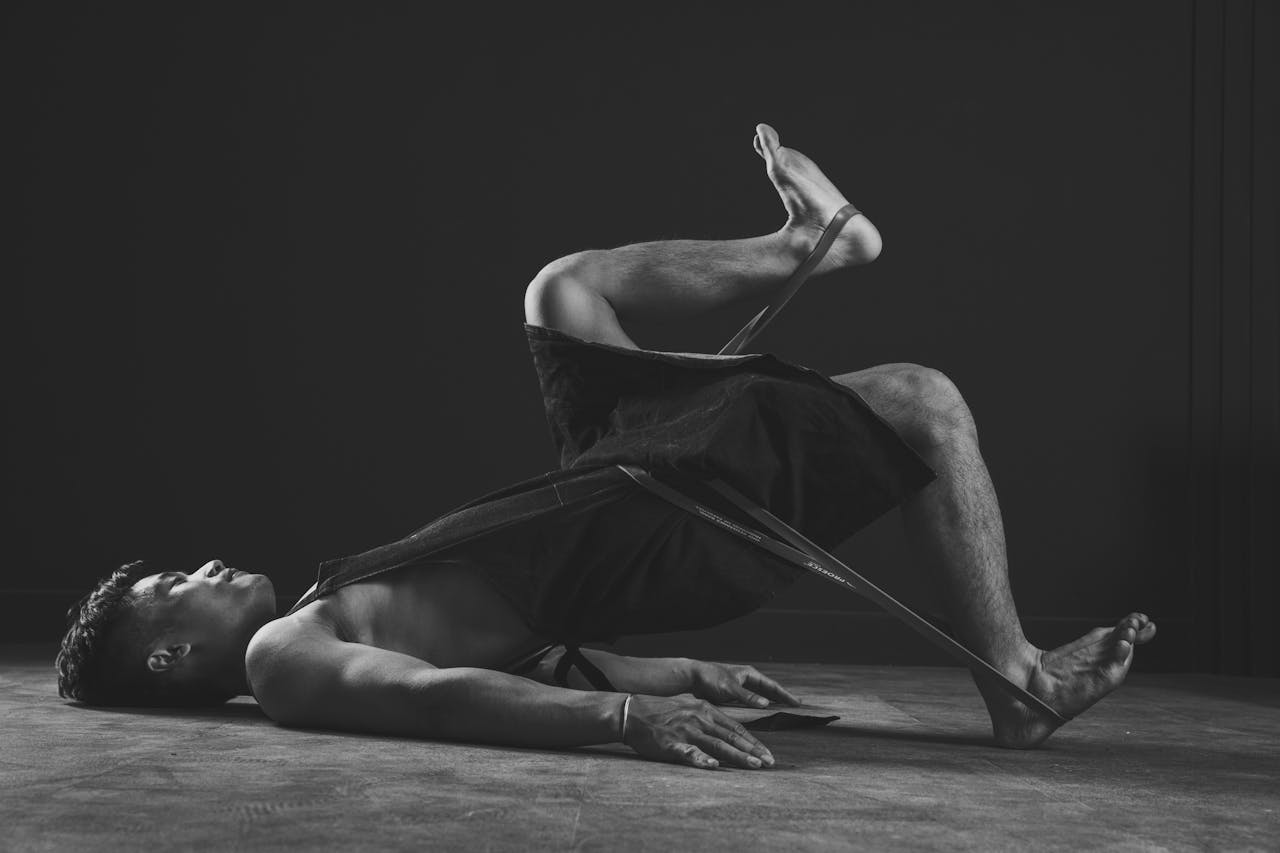
4. Position yourself. Most guys start on their back with knees pulled up toward their chest. This opens the anal canal and makes the angle easier. Some prefer squatting or lying on their side. Experiment, but back-and-knees-up is the training-wheels position for a reason.
5. Insert slowly. One finger, pad facing up (toward your belly). Go past the sphincter—that's the tight ring of muscle at the entrance—and pause. Let your body adjust. This is where people bail because it feels weird or uncomfortable. Push through the weird. It gets better.
6. Go deeper than you think. Once you're past the sphincter, slide in another inch or two. You're aiming for 2-4 inches total depth. Angle slightly toward your navel. Now curl your fingertip in a "come here" motion, pressing gently against the front wall.
7. Feel for the texture change. You're looking for something that feels different from the smooth rectal lining—firmer, maybe slightly ridged or bulbous. It might be subtle. Don't expect a neon sign. Press gently and move your finger in small circles or a rhythmic "come hither" motion.
8. Give it time. Prostate massage doesn't always hit immediately. Some guys feel nothing for 10-15 minutes, then suddenly it's like a switch flips. Keep the pressure consistent but gentle. If you feel a weird "need to pee" sensation, that's normal—it's your urethra reacting to prostate pressure.
9. Adjust if nothing happens. Try angling more toward your belly button or shifting your body position slightly. The prostate isn't a fixed GPS coordinate; slight anatomical differences mean you might need to hunt around a bit.
10. Stop if you're in pain. Discomfort is normal. Sharp pain is not. If you see blood or feel tearing, stop immediately. More on that in the safety section.

Debate: Fingers or Toys for Beginners?
This one comes up constantly, and honestly, both camps have valid points. The finger crowd argues that fingers give you intuitive feedback—you can feel what you're doing, adjust pressure instantly, and you don't need to worry about toy size or rigidity. One guy put it bluntly: "Fingers are best for beginners because you can feel and adjust angle intuitively without needing lube or insertion skills." (Though I'd argue you still need lube, but I get the sentiment.)
On the flip side, the toy advocates say fingers lack reach and precision. If you've got shorter fingers or less flexibility, hitting the prostate consistently can be a workout. Curved toys—especially ones designed for the P-spot—are built to hit the angle without you having to contort your wrist. The counterargument goes: "Toys with curves are superior as fingers lack reach and precision for deeper walnut-sized spot, leading to endless frustration."
My take after years of designing these things? Start with fingers. Learn what you're looking for, build the muscle memory, and figure out what sensations work for you. Once you've got that baseline, a toy can amplify and sustain the stimulation in ways your hand can't. But jumping straight to a toy is like trying to learn guitar by plugging into a Marshall stack—you'll skip the fundamentals and end up confused when it doesn't work.
If you do go the toy route early, pick something small, flexible, and explicitly designed for prostate use. Rigid vibes and oversized plugs are advanced territory, and they'll punish mistakes your fingers would forgive. Click the image below to view dildos (in different sizes) suitable for beginners.
Internal vs. External Stimulation: What Works and Why
Not everyone wants to dive straight into penetration, and that's fine. External stimulation via the perineum is a legitimate path, even if it's less talked about. The prostate gland sits close enough to the surface that firm, rhythmic pressure on the taint—that strip of skin between your scrotum and anus—can stimulate it indirectly.
Why does this work? The pelvic floor muscles and surrounding tissue conduct pressure. Think of it like feeling bass through a wall—you don't need direct contact to sense the vibration. For guys who aren't ready for anal play or have medical reasons to avoid it, perineal massage can still activate some of those nerve pathways.
How to do it: use your fingertips or the heel of your hand and press firmly into the perineum, about halfway between your balls and your anus. Experiment with circular motions, pulsing pressure, or sustained firm contact. You won't get the same intensity as internal stimulation, but you might get enough sensation to make it worthwhile. Some toys are designed for this—external vibrators shaped to nestle against the perineum during sex or masturbation.
The trade-off is obvious: external is less direct. You're not making contact with the prostate itself, so the sensations are more diffuse and often require more time and patience to build. But if you're dealing with hemorrhoids, anal fissures, or just plain nerves about penetration, it's a viable option. No shame in starting here and working your way inward later, or sticking with it if it's enough for you.
Health Screening & Safety: What to Know Before You Start
Here's the part most guides skip because it's not sexy, but it's critical. Your prostate gland is surrounded by sensitive anatomy—bladder, urethra, seminal vesicles, and a network of blood vessels. If you have existing prostate conditions like benign prostatic hyperplasia (BPH), prostatitis, or a history of prostate cancer, you need to talk to a doctor before experimenting with stimulation. Seriously. Prostate massage can exacerbate inflammation or cause complications if your gland is already compromised.
Hemorrhoids are another red flag. If you've got active hemorrhoids—especially internal ones—inserting anything can cause bleeding or worsen the condition. One user's experience sums it up: "Blood scared me shitless first time, thought I tore something—turns out minor hemorrhoid, but now paranoid about every insertion." Minor bleeding from a hemorrhoid isn't the end of the world, but it's a sign to back off and let things heal. If you're seeing significant blood, sharp pain, or symptoms persist, get medical attention. Don't play doctor with your own ass.
Infection risk is real but manageable. The anal canal is home to bacteria that can cause urinary tract infections if introduced to the urethra or bloodstream. Always use clean hands, trim and file your nails smooth, and consider wearing a latex or nitrile glove for extra safety. After play, wash your hands thoroughly with soap and warm water. If you're using toys, clean them immediately with toy cleaner or mild soap—silicone and hard plastic are non-porous and easy to sanitize, but anything with seams or porous material is a bacteria trap.
- Sharp, stabbing pain (could indicate tissue damage)
- Persistent bleeding beyond light spotting
- Burning during urination or bowel movements after play
- Fever, chills, or flu-like symptoms (possible infection)
- Inability to urinate or severe discomfort in the lower abdomen
These are not "wait and see" symptoms. They're "call a doctor now" symptoms. Most prostate play is safe if you're careful, but the consequences of ignoring warning signs can be serious.
Health Benefits (and Myths) of Prostate Stimulation
Let's separate fact from wishful thinking. Prostate massage has been studied for decades, mostly in the context of chronic prostatitis and pelvic pain. Some research suggests that regular massage can help drain prostatic fluid, potentially reducing inflammation and discomfort in men with non-bacterial prostatitis. The evidence is mixed, and it's not a cure-all, but there's enough clinical support to say it's not total nonsense.
For men with BPH—enlarged prostate—massage is sometimes recommended as part of a broader treatment plan, though it's not a replacement for medication or surgery. The idea is that stimulating the gland encourages fluid drainage and may relieve pressure on the urethra, easing urinary symptoms. Again, talk to a urologist before trying this as DIY therapy.
Now for the myths. You'll see claims that prostate orgasms are "healthier" or "more spiritual" than penile orgasms. That's marketing, not science. Prostate orgasms—orgasms achieved through prostate stimulation alone, without penile contact—are a real phenomenon, and they feel different for most people. They tend to be more full-body, less localized, and for some, they're more intense. But they're not inherently superior. Orgasms are subjective, and plenty of guys prefer the straightforward mechanics of penile stimulation.
Another myth: prostate play prevents prostate cancer. There's no evidence for this. Regular ejaculation—through any method—has been loosely linked to lower prostate cancer risk in some studies, but that's about frequency, not technique. Prostate massage doesn't give you magical cancer immunity.
The real health benefit is psychological and relational. Exploring your body, understanding what brings you pleasure, and communicating that to partners can improve sexual satisfaction and reduce anxiety. That's not nothing, even if it's not curing disease.
FAQ: Real Questions, Real Answers
How do I know I've actually found it—does it feel like a firm pea or more like a squishy walnut, and why does one side feel nothing?
It varies. For some, the prostate feels firm and distinct, like a pea or small walnut. For others, it's softer and harder to isolate from surrounding tissue. The asymmetry—one side responding while the other feels dead—is normal. The prostate has lobes, and they don't all have the same nerve density. You might be hitting a less sensitive area, or your finger isn't reaching the responsive zone. Try adjusting your angle or depth. If one side lights up, focus there. Not every square inch has to feel magical.
Real users back this up. One guy described it as "pressing a 'yes' button in my guts"—that's the sweet spot. If you're not getting that, you're either not deep enough, not angled right, or your body just needs more time to wake up to the sensation.
What's the exact finger curl angle if I'm on my back with knees up, and how long to massage before any pleasure kicks in?
Angle your finger pad toward your belly button, not straight back. Think of it as curling up and forward, not just in. The "come hither" motion should be firm but not aggressive—like you're pressing a button, not jabbing it. As for time, 10-20 minutes is typical before sensations build. Some guys feel it faster, some take longer. If you're not feeling anything after 30 minutes, take a break and try again another day. Fatigue and frustration kill arousal, which kills sensation.
Safe way to clean hands/fingers after solo play without infection risk, especially if I have hemorrhoids?
Wash your hands immediately with soap and warm water, scrubbing for at least 20 seconds. If you have hemorrhoids, avoid touching your face or genitals before washing—bacteria from the anal canal can cause infections. If you wore a glove, peel it off carefully and dispose of it, then wash. For dildo toys, use toy cleaner or mild soap and rinse thoroughly. If you're dealing with active hemorrhoids, give yourself time to heal before playing again. Minor bleeding is a sign to stop, not push through.
What if I see blood or feel sharp pain the first time—am I injured, or should I stop?
Stop. Light spotting from a minor hemorrhoid or small tear isn't uncommon, but sharp pain or significant bleeding means you've gone too hard or there's an underlying issue. Give yourself a few days to heal, and if symptoms persist—especially pain during bowel movements or urination—see a doctor. Most injuries are minor, but ignoring them can lead to bigger problems.
One user's panic after seeing blood is understandable: "Blood scared me shitless first time, thought I tore something—turns out minor hemorrhoid, but now paranoid about every insertion." Paranoia is better than recklessness here.
Is it normal to feel nothing after several tries, or is my anatomy different from others?
It's normal. Not everyone responds strongly to prostate stimulation, and that doesn't mean you're broken. Anatomical differences—prostate size, position, nerve density—play a role. Psychological factors matter too. If you're stressed, distracted, or forcing it, your body won't cooperate. Some guys never get much out of it, and that's fine.
Try varying your approach—different anal positions, more arousal buildup, external stimulation—but don't treat it like a test you have to pass. The frustrated guy who posted "Tried everything, still just poking my own ass for nothing—am I broken or is this spot a myth for skinny guys only?" isn't broken. He might need more time, a different technique, or he might just be in the camp where prostate play isn't his thing. All of those are valid outcomes.
Safe way to gradually introduce thicker toys to build stretch tolerance without risking tears or prolapse?
Progress slowly and listen to your body. Start with a small, slim toy you can comfortably insert and hold for 10–15 minutes while relaxed and aroused. Only move to the next size up (usually 0.2–0.5 cm in diameter) after you can easily take the current one with minimal discomfort for multiple sessions.
Use plenty of thick, long-lasting lube (silicone or hybrid), go slow, and never force it. Incorporate deep breathing and progressive relaxation. If you feel burning, sharp pain, or excessive tightness, stop immediately and drop back a size. Building tolerance can take weeks or months—rushing is the fastest way to tears or worse.
Most experienced users recommend the “one size up every 2–4 weeks” rule only if everything feels good. Consistency with smaller toys + regular play is safer and more effective than jumping sizes quickly. Always stop at any sign of prolapse symptoms (bulging, heaviness, or inability to hold things in).
Final word from me: This isn't a one-size-fits-all thing. Some of you will find it on the first try and wonder what the fuss was about. Some will spend weeks figuring it out and have a breakthrough that rewrites your understanding of anal pleasure. And some will decide it's not worth the effort, and that's completely fine. The point is to explore on your own terms, with accurate information and realistic expectations. No hype, no shame, just the map. Where you go with it is up to you.
Article Editor: JockTribeRoger, Co-Founder & Lead Designer
Check out our : comprehensive guide to dildo materials and stiffness;