
Shore 00–50 Demystified: Choosing and Using Ultra-Soft Materials (and Avoiding Painful Mistakes)
See, I've spent the last eight years casting silicone toys in my Hong Kong workshop, and I can tell you right now that Shore 00–50 is one of those specs that sounds boring as hell until you're three casts deep into a project and realize your material is either tearing like tissue paper or feels like you're inserting a rubber tire. The difference between getting this right and wasting fifty bucks on ruined silicone comes down to understanding what these numbers actually mean for your body.
Most guides treat durometer scales like some abstract engineering concept. But when you're making something that goes inside you, or designing gear that sits against skin for hours, this isn't theoretical. It's the difference between comfort and a trip to urgent care.
What is the Shore Durometer Scale? (And Why 00–50 Is in a League of Its Own)
A durometer is basically a fancy poker that measures how hard you have to press into a material before it gives way. The Shore scale breaks this down into different ranges because—surprise—a gel insole and a car tire need completely different measurement tools.
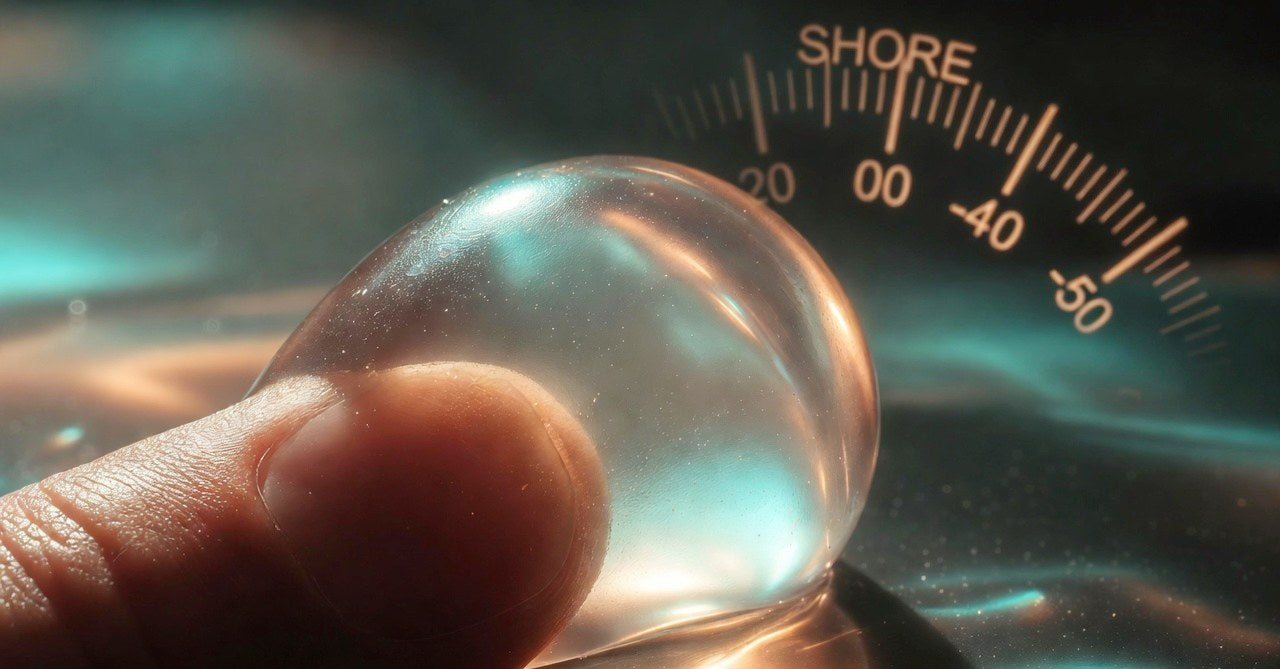
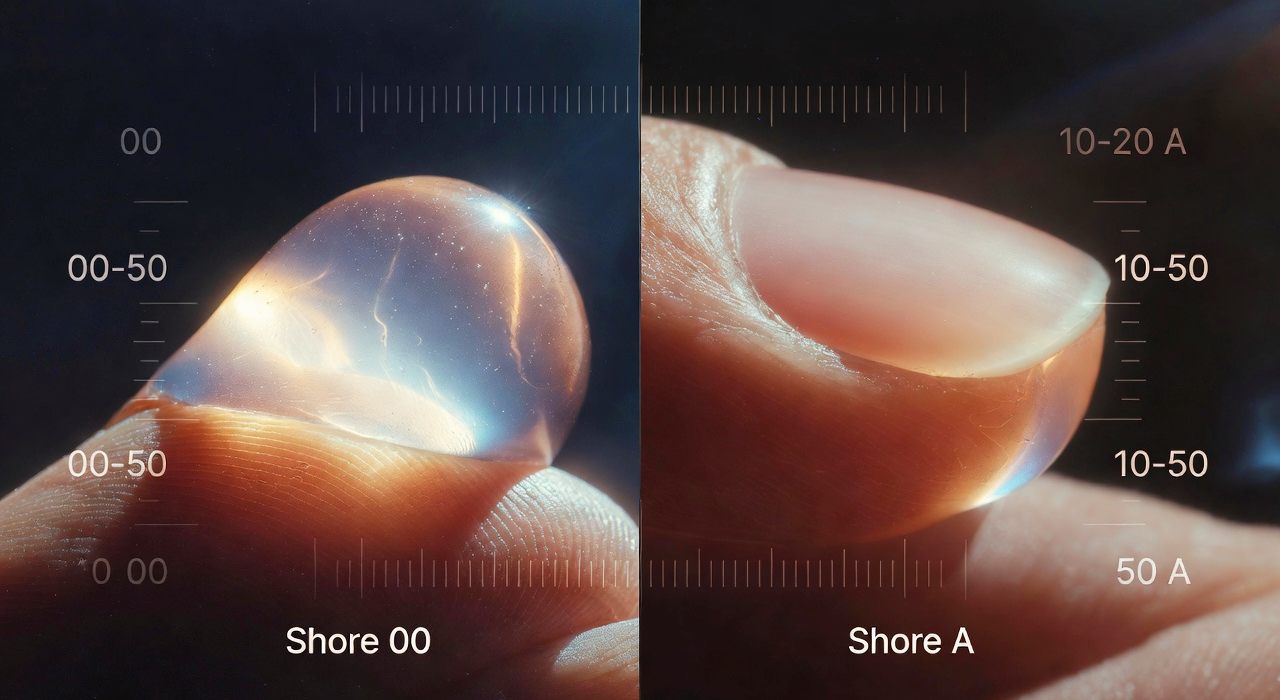
Here's where it gets interesting: Shore 00 exists specifically for materials so soft that the standard Shore A scale bottoms out. We're talking about gels, ultra-soft elastomers, and materials that feel closer to human tissue than rubber. The Shore 00 scale runs from 0 (basically liquid) to 100 (where it starts to overlap with Shore A 0–20).
When someone says Shore 00–50, they're talking about the sweet spot between "this collapses under its own weight" and "this has enough structure to actually function." Think of the difference between hair gel (Shore 00-5) and a pencil eraser (Shore 00-50 to A-20).
The ASTM D2240 standard—which is the official testing protocol—uses a spring-loaded indenter that penetrates the material. For Shore 00, that indenter is blunter and uses less force than Shore A, because you're measuring materials that would just squish flat under normal pressure.

I've tested hundreds of samples, and here's what nobody tells you: Shore 00-30 silicone feels completely different from Shore A-30 silicone, even though mathematically they're close. The Shore 00 material has this almost sticky compliance that molds to pressure, while Shore A at the same number feels firmer and more elastic. This matters enormously when you're choosing materials for body contact.
Debate: Platinum vs. Tin-Cure Silicone at Shore 00–50—Is Safety Guaranteed?
This is where the internet loses its mind, and honestly, both sides have valid points but also spread some dangerous bullshit.
Platinum-cure silicone advocates will tell you it's the only truly body-safe option. They're not entirely wrong. Platinum cure doesn't inhibit easily, cures consistently, and maintains its properties forever. It's what medical silicone manufacturers use because it doesn't leach chemicals over time and stays stable in moist, warm environments. When you're making something that's going to be in contact with mucous membranes, this matters.
But then you've got the tin-cure defenders saying platinum is overpriced marketing hype. And look, I get it—tin-cure Shore 00-30 is significantly cheaper and can feel just as soft initially. One maker on Reddit put it perfectly: "Thought cheaper tin cure 00-50 would work fine, now my ass itches like hell 2 days later—platinum only from now on, lesson learned."
Here's my take after dealing with both extensively: tin-cure has its place, but not for anything going inside you or staying on skin for extended periods. The problem isn't immediate toxicity—it's degradation. Tin-cure yellows over time, can become brittle, and in the Shore 00–50 range, it tends to get tackier and stickier as it ages. That tackiness isn't just annoying; it can harbor bacteria and irritate sensitive tissue.
The real controversy is that some manufacturers label their tin-cure products as "body-safe" because they meet certain chemical composition standards at time of manufacture. But they're not accounting for what happens after six months of use with water-based lube exposure, temperature cycling, and cleaning. I've seen tin-cure Shore 00-40 plugs develop surface degradation that looks like tiny cracks—invisible until you run your finger across and feel the texture change.
My rule: If it's going inside any orifice or staying against skin for more than an hour, use platinum-cure. Period. For external props, display pieces, or short-contact applications, tin-cure at Shore 00–50 can work fine and save you money. But don't kid yourself about long-term body safety.
Shore 00 Scale: Applications and Surprising Everyday Examples
When you're trying to visualize Shore 00–50, most charts give you useless comparisons. Let me give you the real-world anchors I use when consulting with clients:
Shore 00-10: Think silicone gel breast implants or those squishy stress balls that feel almost liquid inside. This is "collapses under pressure" territory. Some people love this for toys because it molds perfectly to internal anatomy, but it's also floppy as hell and attracts every piece of lint in a five-mile radius.
Shore 00-20 to 00-30: This is where Smooth-On's Dragon Skin lives, and it's probably the most popular range for DIY body toys. It's got enough structure to hold shape but still compresses easily. A good comparison is those gel shoe inserts or high-end earplugs (the silicone kind, not foam).
Shore 00-40 to 00-50: Now we're getting into firmer territory that overlaps with Shore A-10 to A-20. Think gummy candy that's been sitting out for a day, or a firm pencil eraser. This range is popular for o-rings in low-pressure applications, soft gaskets, and what I call "beginner-plus" anal toys—structured enough to guide insertion but still yielding.

What most people don't realize is that Shore 00–50 materials are increasingly used in 3D printing for medical applications. Post-2024, we've seen bio-based elastomers in this range being used for prosthetic liners, wearable health sensors, and even experimental soft robotics. The reason? This durometer range mimics human tissue compliance better than anything else.
I've also seen some brilliant uses in the kink community for custom harness padding and impact play gear. A Shore 00-30 silicone pad can distribute impact force way more effectively than foam, and it's actually cleanable. But you need to get the thickness right—too thin and it bottoms out, too thick and it feels like hitting a mattress.
The Risks of Going Too Soft or Too Firm: True Stories from DIY Toy Makers
Let's talk about the failures, because that's where the real learning happens.
Too Soft (Shore 00-10 to 00-20): One of the most common complaints I see is about stickiness. A user on a fetish forum nailed it: "Shore 00-10 feels amazing at first but after an hour it warms up and gets this gross sweaty stickiness that pulls hairs—never again."
The problem is surface tackiness. Materials in this range have high indentation resistance but low surface cohesion. They want to stick to themselves, to skin, to literally everything. You can powder them with cornstarch, but that's a temporary fix that wears off during use. I've also seen Shore 00-10 toys literally fold over on themselves during insertion because they lack structural integrity.
Too Firm (Shore 00-50 and up): On the other end, people chase "better structure" and end up with something that pokes. The debate between Shore 00-10 vs 00-50 for anal toys is real. One side argues "00-10 is too sticky and floppy, attracts lint, and feels like jelly that collapses inside—go 00-50 for better structure." The other side fires back: "00-50 is borderline too firm for anal, causes poking pain; 00-10 molds perfectly to the body and is the true 'squishy' experience."
Both are right depending on anatomy and experience level. But here's the mistake: choosing durometer based on what sounds good rather than testing. I always recommend making small test pieces at different hardnesses before committing to a full pour.
The Bubble Disaster: The most catastrophic failure I see repeatedly is improper degassing. Check this frustrated maker's experience: "Finally got my 00-40 plug molded but it fucking tore right at the base on the third try—bubbles everywhere, total waste of $50 pigment."
Bubbles in Shore 00–50 silicone create weak points that act like perforation lines. When you apply stress during insertion or removal, the material tears right through those air pockets. And because these materials are so soft, even tiny bubbles can compromise structural integrity. Vacuum degassing isn't optional at this durometer range—it's mandatory.
The Caulk Horror Story: This one makes me genuinely angry. Someone will see "Shore 00-30 soft" on a tube of silicone caulk at the hardware store and think they've found a budget alternative. Wrong. Household silicone caulk releases acetic acid as it cures (that vinegar smell), and while it might test at Shore 00-30 initially, it cures brittle and toxic. I've heard reports of chemical burns and material that cracks after a few uses. Never, ever use hardware store caulk for body-contact applications.
Stop Sabotaging Your Mold: Hands-On Guide to Accurate Shore 00–50 Hardness Testing
Most DIY makers never actually test their materials. They trust the manufacturer's spec sheet and then wonder why their Shore 00-30 pour feels like Shore 00-50.
Here's how to do it right:
Get the Right Tool: You need a durometer specifically calibrated for Shore 00. Shore A durometers will give false readings on ultra-soft materials. I use a Rex Gauge Model 1600, but there are cheaper digital options that work fine if calibrated properly.
Sample Preparation Matters: Your test piece needs to be at least 6mm thick. Thinner samples compress to the backing surface and give artificially high readings. The material should be fully cured—test at least 24 hours after demolding, longer for thick sections.
Testing Technique: Place the durometer foot flat on the surface with the indenter point perpendicular to the material. Apply steady, even pressure until the foot is in full contact. Read the gauge within one second—Shore 00 materials recover quickly, and delayed readings will be lower than actual hardness.
Take at least three readings at different spots, avoiding edges and areas near mold seams. Average the results.
Common Testing Errors:
- Bubbles near the surface: Create soft spots that read lower. This is why that frustrated maker's plug kept tearing—the bubbles weakened the material, but they also gave false durometer readings that made him think the whole piece was softer than spec.
- Incomplete cure: Silicone can feel dry on the surface but still be soft inside. Shore 00 materials especially need full cure time. I test a scrap piece by cutting it in half—if the interior is shinier or tackier than the exterior, it's not done.
- Temperature: Shore 00 materials are temperature-sensitive. Test at room temperature (23°C/73°F) for consistency. A warm sample will read softer.
- Surface finish: Mold release residue or powder coating will affect readings. Test on clean, untreated surface.
Calibration: Check your durometer against a certified test block every few months. Even good durometers drift over time, especially with heavy use.
To be honest, most hobby makers skip testing entirely and just go by feel. That's fine until you need to replicate a successful formula or troubleshoot a failure. I've seen makers waste entire batches trying to recreate a "perfect" pour because they never measured the original.
When Silicone and Lube Collide: Answers to Your Deepest (Sticky) FAQs
How do I stop soft Shore 00-30 silicone from feeling sticky or grabbing skin during use?
Surface tackiness in ultra-soft silicones is an inherent material property, not necessarily an incomplete cure. While temporary powders wear off quickly, the most effective solution is stepping up to a Shore 00-40 or 00-50 durometer. This slightly firmer hardness drastically reduces surface energy and tackiness while maintaining comfortable body compliance.
What is the correct way to soften Dragon Skin 00-30 to a Shore 00-20 feel without ruining the cure?
Do not alter the 1:1 mix ratio of Part A and Part B, as unbalanced platinum chemistry leads to incomplete curing. Instead, add 1–5% by weight of Smooth-On Slacker or 5–10% Silicone Thinner into Part A before mixing. Keep pigment concentrations below 3% to avoid stiffening, and cure at room temperature (73°F/23°C) for the truest hardness reading.
What is the primary cause of DIY silicone anal plug failure—air bubbles or wrong hardness?
Air bubbles cause physical tearing, while incorrect hardness causes user discomfort. Micro-bubbles left from improper vacuum degassing create internal stress points, causing soft Shore 00–50 silicone to tear under tension (typically at the narrow base). Always vacuum degas before pouring to ensure structural integrity.
The Shore 00–50 range is where material science meets human experience in the most intimate ways. You can read spec sheets all day, but until you've held a Shore 00-20 sample in one hand and a Shore 00-50 in the other, you don't really understand the difference. And until you've dealt with the consequences of choosing wrong—whether that's a dildo toy that tears mid-use or one that causes pain—you won't appreciate how critical these numbers are.
I've made every mistake I've written about here. I've wasted expensive platinum silicone on poorly degassed pours. I've chosen Shore 00-10 when I should have gone with 00-40. I've learned by fucking up, and I'm sharing this so you don't have to.
Article Editor: JockTribeRoger, Co-Founder & Lead Designer
Check out our : comprehensive guide to dildo materials and stiffness;






)