The Shore 00 Logic: Designing Flesh-Like Feedback
When most people talk about a realistic dildo, they say things like "soft," "lifelike," or "feels real."
For us, those words translate into Shore 00 hardness, dual-layer silicone, and controlled support that your body can actually feel.
Instead of chasing "as soft as possible," we focus on how materials compress, rebound, and push back under real use. That's what makes the difference between a toy that feels like rubber and one that feels closer to a real body.
What "Soft" Really Feels Like
When you say a dildo feels soft, you are noticing several things at once:
- How easily the surface gives on first touch
- How deep you can press before you hit resistance
- How fast it springs back
- How warm and grippy the surface becomes against skin
Real bodies aren't one uniform softness. You feel skin and soft tissue first, then deeper muscle support.
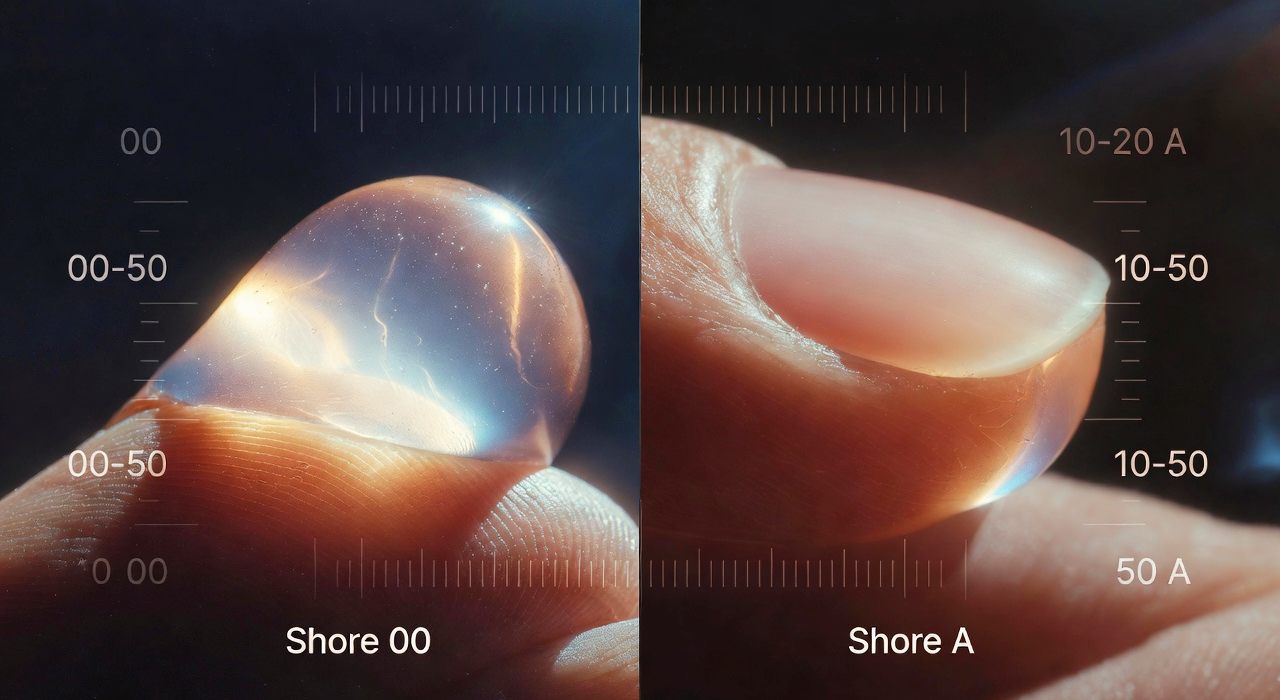
That is why we work in the Shore 00 range, which is designed for very soft, flesh-like materials, rather than only using the much harder Shore A range.
In simple terms:
- A low Shore 00 feel gives you that plush, yielding surface.
- A higher Shore 00 feel gives you the internal support that keeps everything from collapsing.
How We Translate Anatomy Into Silicone
Human bodies are complex, but for design we think in three layers: skin, fat, and muscle.
We don't copy them one by one—we recreate the behavior using a consistent two-layer silicone system plus targeted softness in key areas.
In our realistic dildos:
- The outer layer combines the role of skin and surface fat: soft, welcoming, with comfortable friction.
- The inner core behaves like underlying muscle: medium firmness, stable, and supportive.
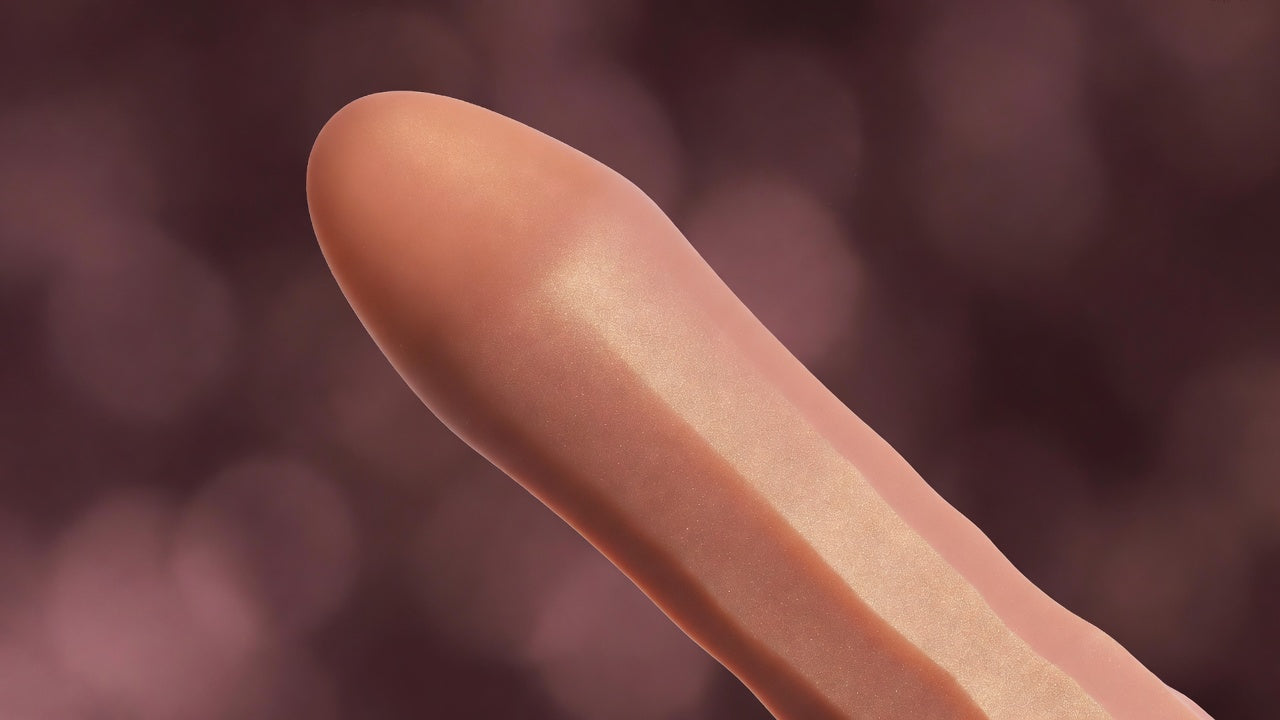
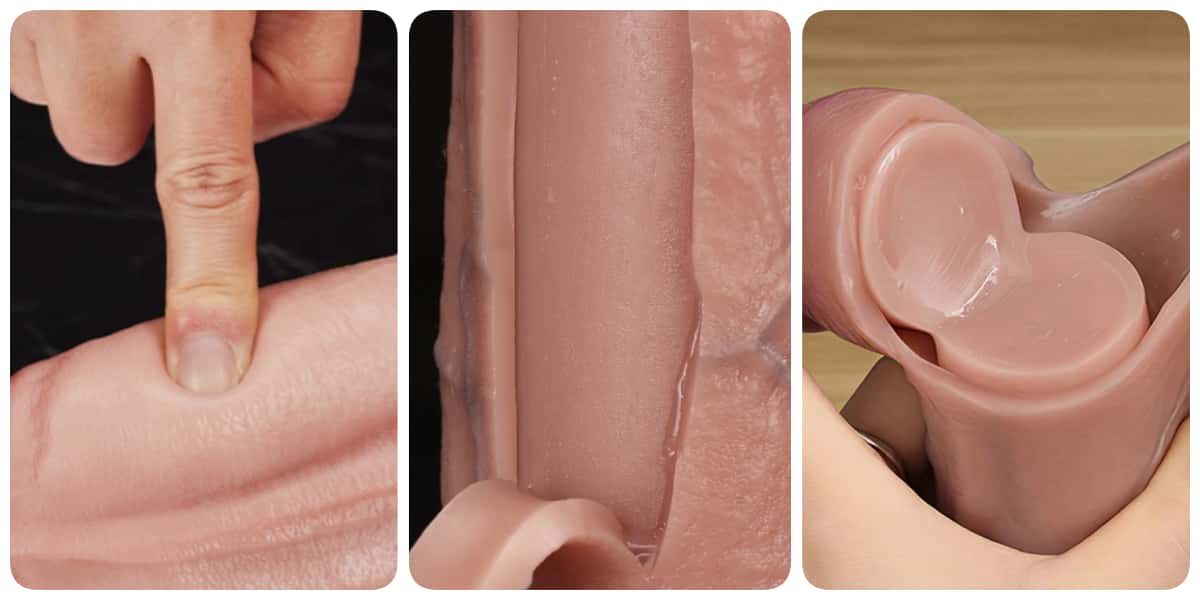
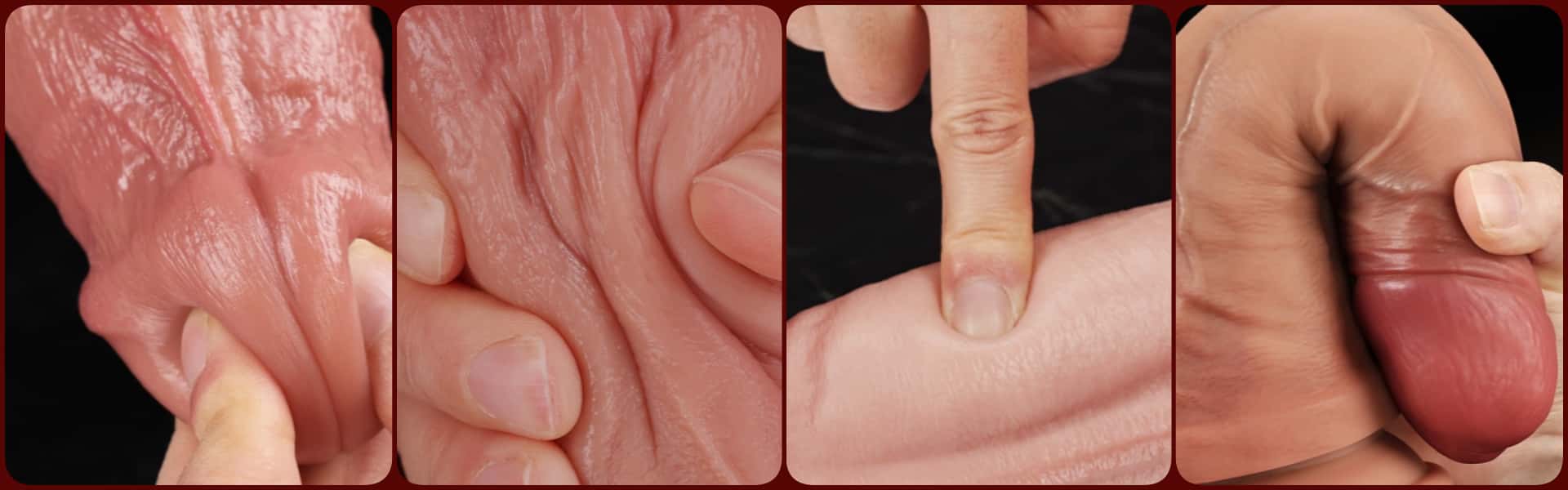
- The head (tip) is tuned softer than the shaft—but not so soft that it collapses—so that first contact feels extra gentle and realistic.(The images below are from Jocktribe's series of realistic dildos;)

So instead of "a single block of one hardness," you get soft outside, supportive inside, and a tip that feels even more forgiving.
Why We Don't Go "All-Soft" or "All-Firm"
We test extremes so you don't have to.
All-soft designs may feel impressive in the hand, but during use they tend to fold, buckle, and lose shape. Insertion becomes harder and control drops.
All-firm designs hold detail and are easy to mold, but they often feel plastic-like on first contact and too unforgiving over time.
Our approach is to stay in the middle: a soft Shore 00 outer layer for comfort and realism, over a medium Shore 00 core that keeps the dildo aligned, responsive, and reliable in different positions.

Our Standard Dual-Layer Shore 00 System
Across the JockTribe line, we use a consistent, "one-size-fits-most" hardness logic instead of changing Shore values for every model.
Soft Shore 00 Outer Layer
- Plush, flesh-like give
- Extra softness at the head for gentle, realistic first contact
- Designed not to collapse under typical use
Medium Shore 00 Inner Core
- Chosen to work for most people as everyday support
- Firm enough to guide, resist buckling, and hold anatomical detail
- Not so rigid that it feels mechanical or like hard plastic
We keep this dual-layer Shore 00 system stable across models, and then adjust shape, thickness, and detailing to create different sensations—not random hardness changes.

Roger's Note
Silicone hardness isn't just about picking "soft" or "medium" from a menu.
During curing, the silicone's molecular chains link together. The tighter they link, the firmer and snappier the material feels; the looser they link, the softer and slower it rebounds.
For our realistic dildos, we use this to:
- Give the outer layer a softer, slower rebound that feels cushioned and forgiving.
- Give the inner core a faster, more elastic pushback that keeps the toy feeling stable and alive instead of floppy.
- You don't see any of this chemistry—but you feel it every time you squeeze, press, or thrust.
About the Author: JockTribeRoger is JockTribe's Lead Materials Engineer, responsible for developing our dual-layer Shore 00 system.
check our new post about : Realistic Dildo Materials & Hardness Full Guide
What This Means for You
When you choose a JockTribe realistic dildo, you are getting:
- ✓ A consistent dual-layer Shore 00 system designed to fit most people's comfort and
- control sweet spot
- ✓ A soft, flesh-like outer layer with a gentler head and a slightly firmer shaft for better guidance
- ✓ A medium-firm inner core that supports, rebounds, and keeps the shape from collapsing
- ✓ A feel that is engineered to behave like skin and muscle working together, not just a piece of soft rubber
We don't change hardness for every single model just for the sake of it.
We found a Shore 00 profile that works for most bodies — then we use geometry and sculpting to fine-tune how each dildo feels in your hand and in your body.
Most brands chase trends. We engineer constants.
Because your body doesn't need endless options — it needs the right one, executed perfectly, every single time. That's why we standardized our Shore 00 system: not to limit choices, but to guarantee consistency. When you know what works, you don't experiment on your customers — you deliver it reliably.
Every soft outer layer. Every medium core. Every gentle head. Engineered once, perfected always.
Explore Our Realistic Dildos Collection:
Dual-Layer Silicone Dildos — All models featuring our Shore 00 system
Small Dildos — Perfect for beginners wanting lifelike feel
Large Dildos — More size, same Shore 00 engineering
Further Reading on Hardness & Soft Tissue
If you want to dive deeper into hardness scales and soft tissue mechanics, here are some useful references:
Shore durometer basics (hardness scales and indentation testing):
https://en.wikipedia.org/wiki/Shore_durometer
General overview of hardness and common hardness tests:
https://en.wikipedia.org/wiki/Hardness
Classic technical paper on hardness measurement methods (NIST):
https://nvlpubs.nist.gov/nistpubs/nbstechnologic/nbstechnologicpaperT11.pdf
Review article on biomechanics of soft biological tissues (NIH / PubMed Central):
https://pmc.ncbi.nlm.nih.gov/articles/PMC11775666/
Research on how soft tissue heterogeneity affects biomechanics (NIH / PubMed Central):
https://pmc.ncbi.nlm.nih.gov/articles/PMC10231866/