
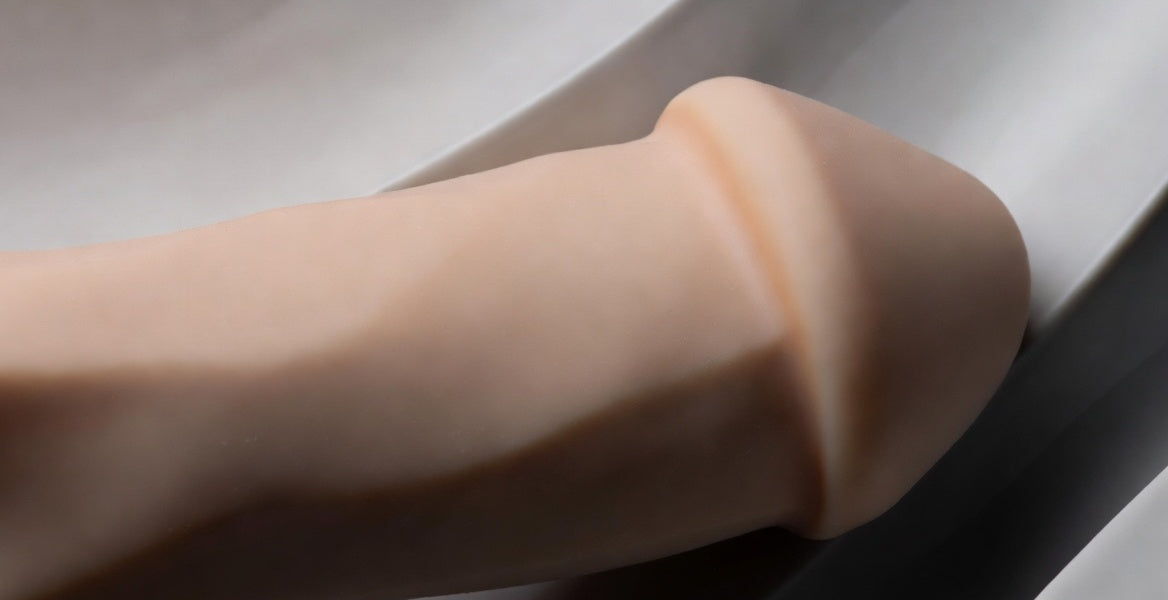
Best Realistic Dildos for Advanced Users (2026)
Many products are labeled realistic.
Far fewer hold up once real pressure, repeated movement, and sustained sessions are involved.
For advanced users, realism is not defined by surface appearance. It is defined by how a dildo behaves under load — how it resists, rebounds, distributes weight, and maintains structural feedback over time. Our this article is written for experienced buyers who already understand the basics and are looking to refine performance, not experiment blindly.
What “Realistic” Actually Means for Advanced Users
At an advanced level, realism stops being visual and becomes mechanical.
Surface details such as veins, coloration, or texture contribute little once pressure is applied. What matters instead is how the material responds: whether it collapses, resists, rebounds, or loses form during use. click here, see our realistic dildo collections.

For advanced users, realistic performance usually comes down to three things:
- Controlled resistance rather than extreme softness
- Elastic recovery rather than rigid hardness
- Density that responds to pressure instead of uniform compression
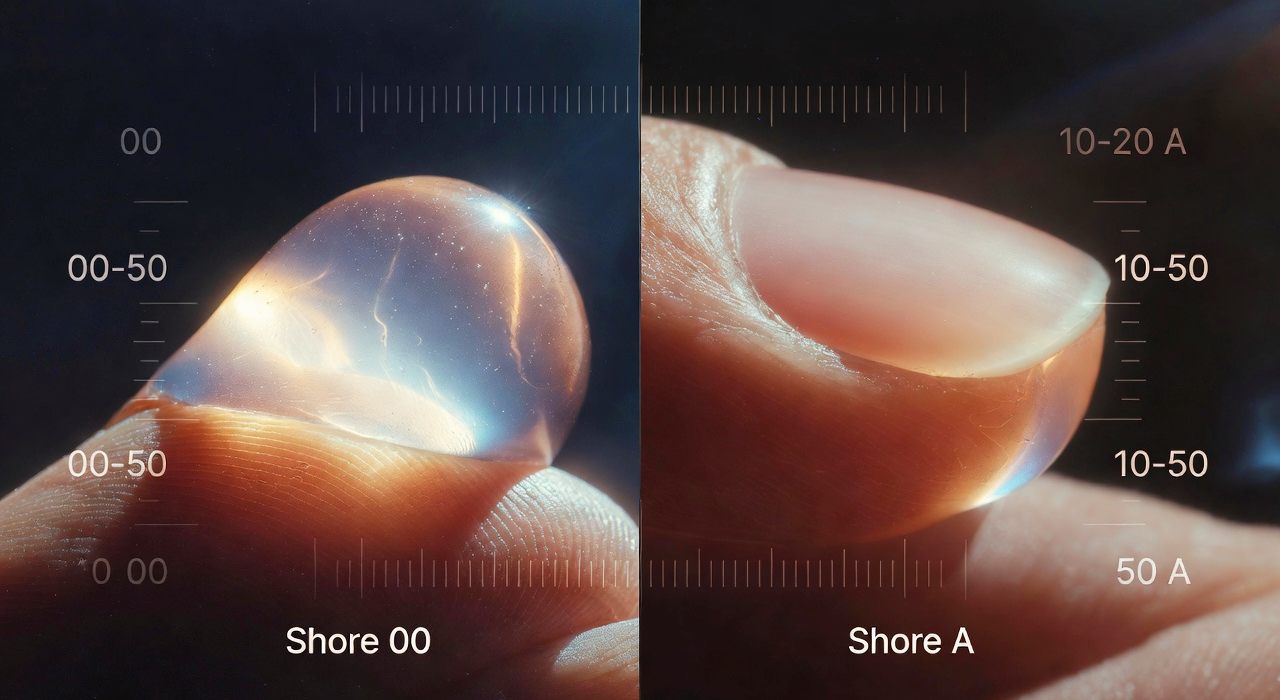
From a materials perspective, how silicone resists and recovers under force matters far more than surface geometry once pressure is applied.
Material Quality: Why Silicone Choice Defines Realism
Material formulation is the foundation of realistic performance.
Silicone is not a single, uniform material. Its mechanical properties depend heavily on formulation, curing method, and filler content. According to general materials references, fillers added to silicone rubber can significantly alter elasticity, rebound, and long-term stability under stress.(Source: https://en.wikipedia.org/wiki/Silicone)
Low-grade silicone blends may feel soft initially, but often degrade under repeated pressure. High-quality, platinum-cured liquid silicone rubber (LSR) exhibits more stable elastic behavior and consistent recovery characteristics over time.(Source: https://en.wikipedia.org/wiki/Liquid_silicone_rubber)
In practice, material quality ends up determining how realistic a silicone product feels in use, while surface detailing quickly becomes secondary once resistance and feedback come into play.
our silicone material research on long-term performance and compatibility
Density, Firmness, and Structural Feedback

One of the most common failures in “realistic” designs is incorrect density tuning.
- Too soft → collapses under pressure
- Too firm → feels artificial and unresponsive
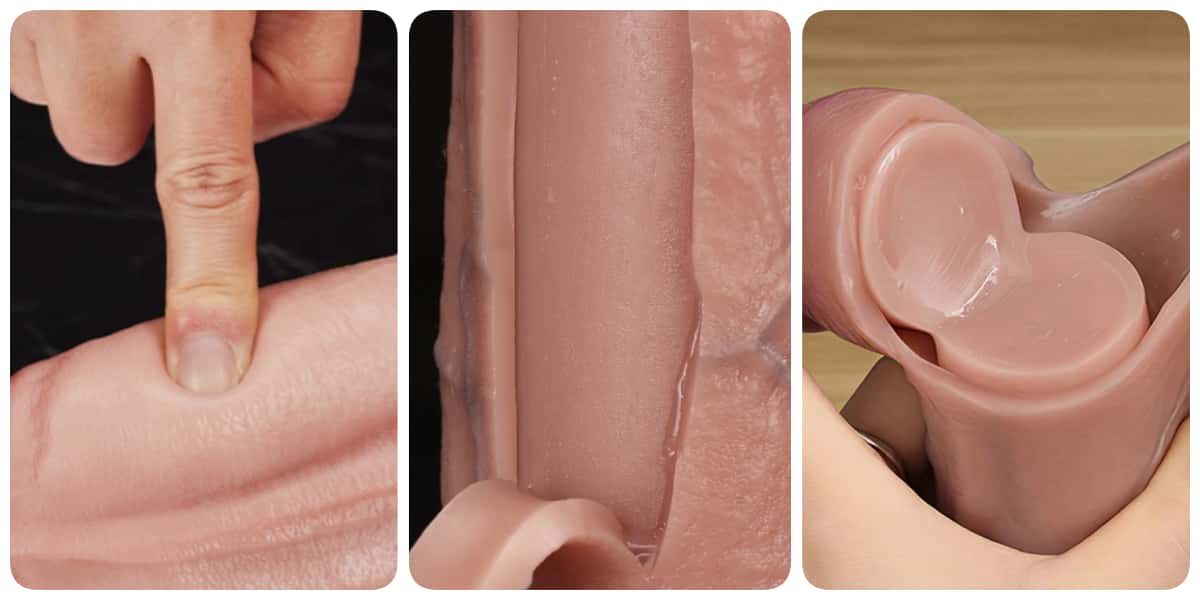
Advanced users typically prefer graduated firmness, where different zones of the product respond differently under load. This approach aligns with how layered silicone materials are engineered in other industries, where mechanical gradients are used to balance flexibility and resistance.
(Density & Firmness Comparison)
| Design Attribute | Low-Grade “Realistic” Toys | Advanced-Level Realistic Designs |
|---|---|---|
| Density profile | Uniform, overly soft | Graduated firmness zones |
| Resistance under pressure | Collapses easily | Controlled resistance & rebound |
| Elastic recovery | Slow or inconsistent | Predictable elastic return |
| Structural feedback | Minimal | Noticeable and stable |
| Long-term feel | Degrades over time | Maintains consistency |
This difference explains why some products appear realistic visually but fail during actual use.
Weight, Balance, and Control Under Use
Weight is not about size — it is about control and predictability.
Advanced users quickly notice when a product feels top-heavy, unstable, or poorly balanced. When weight is distributed correctly, pressure feels consistent and movement stays controlled instead of distracting.
Material density, internal structure, and base stability all influence how weight is perceived during use. These factors are mechanical, not cosmetic, and are directly linked to how silicone behaves under stress.
Realistic Dildos for Anal vs General Use (Advanced Context)
Use context changes material requirements.
For advanced anal use, controlled flex and surface consistency are essential. Sudden changes in density or unstable structures can disrupt control. For general use, realism emphasizes resistance and elastic response under repeated pressure. click here, see our anal dildo collections.

In both cases, material behavior — not surface decoration — determines whether a product feels convincing during sustained sessions.
What to Avoid When Choosing a “Realistic” Dildo
Experienced users often identify realism by elimination.
Common pitfalls include:
- Overly soft bodies that collapse under pressure
- Hollow cores that reduce feedback
- Cosmetic realism that sacrifices structural integrity
- Lightweight designs that lack resistance
These design choices may look appealing but undermine long-term performance.
Emerging Trends in Realistic Silicone Design (2026)

Several material-driven trends are shaping advanced realistic designs in 2026:
Multi-Density Silicone Formulation
Layered silicone structures with varying firmness zones allow more precise control of resistance and rebound. This approach mirrors techniques used in industrial and medical silicone applications.
Focus on Surface Stability
Manufacturers are shifting away from excessive surface detailing toward more stable, low-filler formulations that preserve texture and feel over time.
Performance-Driven Realism
Realism is increasingly defined by resistance, feedback, and durability rather than visual exaggeration — aligning product design more closely with material science principles.
Best Realistic Dildos for Advanced Users (2026)
Rather than ranking products numerically, advanced users benefit more from understanding design intent:
- Designs optimized for resistance and control
- Designs focused on balanced weight and stability
- Designs engineered for long sessions without material fatigue
Final Thoughts
For advanced users, realism is less about what you see and more about what you actually feel during use.
Material behavior, structural integrity, and controlled feedback define realistic performance far more reliably than surface detail. Understanding these principles allows experienced buyers to select products that remain convincing beyond first impressions.
FAQ About Realistic Dildos for Advanced Users
Q1: Why does surface geometry contribute little to actual realism for experienced users?
Once mechanical pressure is applied during sustained sessions, visual details such as veins or coloration do not translate into physical feedback. Realism at an advanced level is strictly defined by how the material behaves under load. Without proper elastic recovery, graduated firmness, and controlled resistance, cosmetic detailing fails to maintain structural integrity under stress.
Q2: What defines the structural fatigue difference between low-grade blends and platinum-cured silicone?
It depends heavily on formulation and filler content. Low-grade silicone formulations often rely on heavy fillers to mimic initial softness, leading to uniform over-compression and unpredictable deformation under repeated movement. Conversely, high-quality, platinum-cured liquid silicone rubber (LSR) exhibits stable elastic behavior, resisting degradation and maintaining consistent mechanical gradients over time.
Q3: How do density profiles differ between advanced anal applications and general use?
Use context fundamentally alters the mechanical requirements of the design. Advanced anal applications necessitate highly controlled flex, structural base stability, and surface consistency to eliminate unpredictable buckling. General use profiles, however, prioritize rapid elastic return and controlled resistance under continuous, repetitive force to simulate authentic feedback.









)
I only want realistic dildos; I don’t really like fantasy toys.
I once bought a Dildo made of TPE material, but I threw it away after 3 months.
😍 It’s well-written. For me, a realistic dildo is ideal. It should be close to skin tone, with realistic texture, and a soft glans and scrotum.